



Photograph by Olivia Leung-Brown
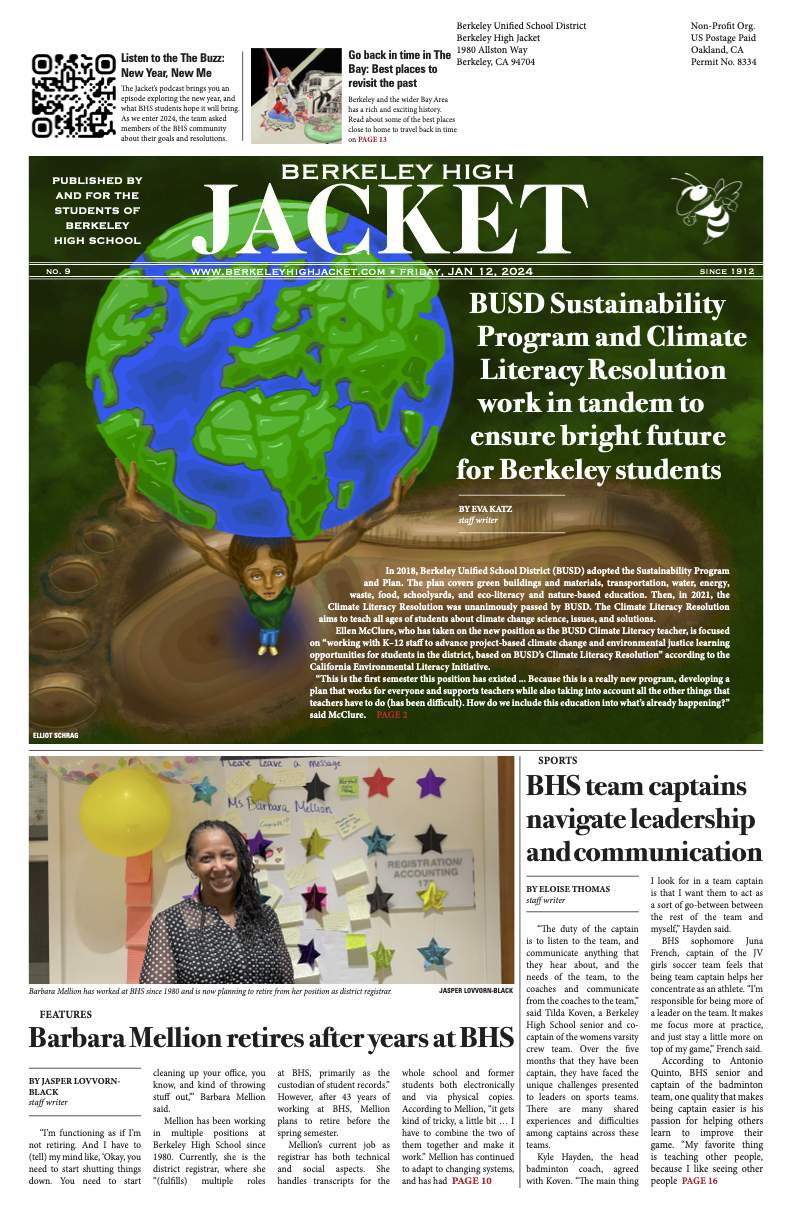
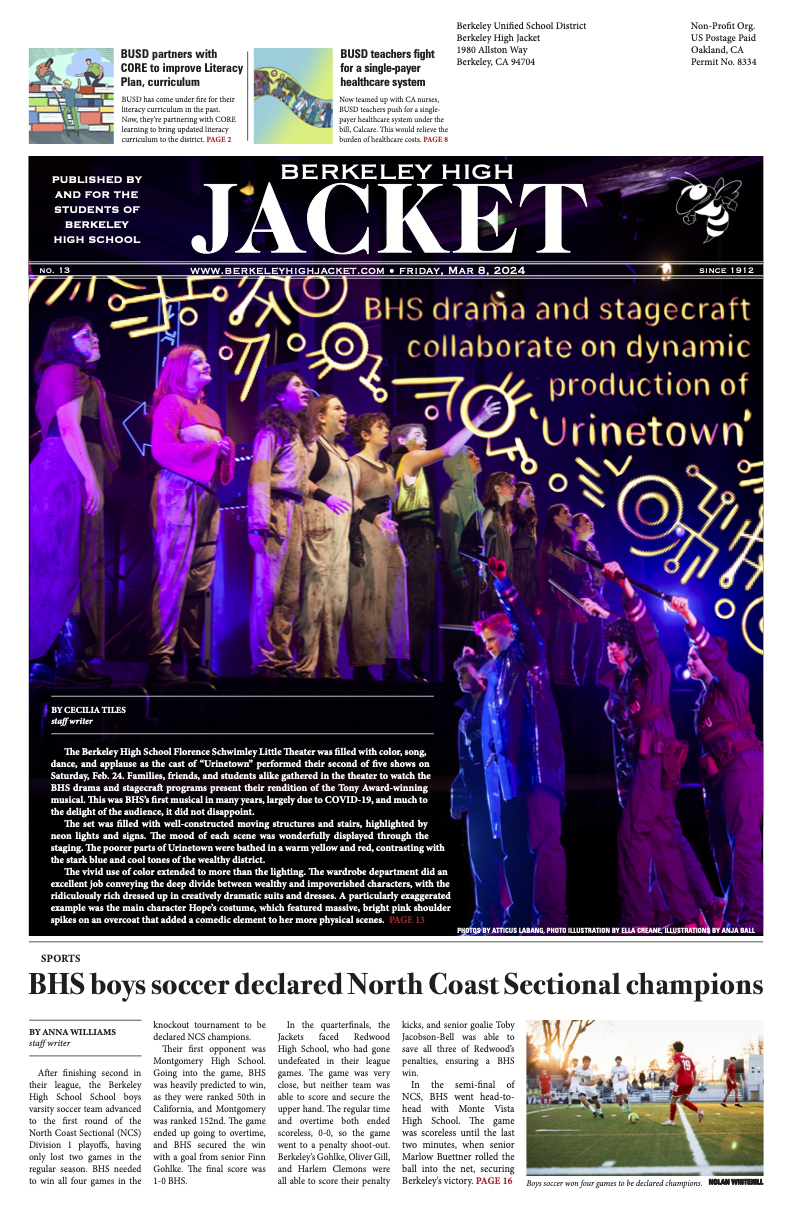
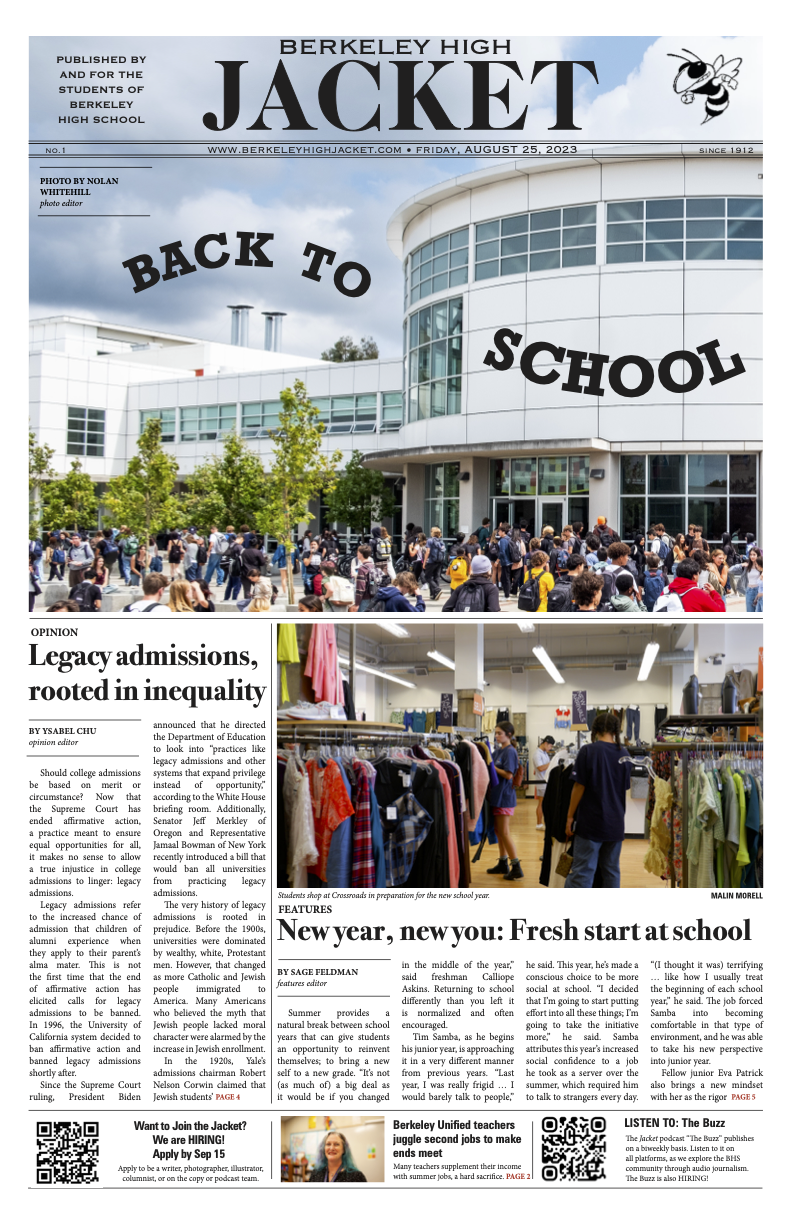
The spectre of gun violence weighs heavily on the minds of most students these days. School shootings happen with regularity and are covered heavily in the media. Threats are made against Berkeley High School (BHS), and classes are disrupted by lockdown drills. High schools nationwide are walking out in protest of what they see as overly loose gun laws. So it’s fitting that the Berkeley Repertory Theater has chosen to produce the play Office Hour.
Office Hour follows a teacher trying to get through to Dennis, a troubled student who is described by a faculty member as “a classic shooter”. Aside from two scenes at the beginning and end, the entire play is a tense conference between Dennis and Gina, the teacher. As the plot progresses, it becomes clear that Dennis is not just a hypothetical school shooter. He regularly goes to a shooting range for “practice”. His backpack is full of guns and ammunition. It is never stated outright, but Dennis will be deadly if left alone.
The acting in Office Hour is exceptional. Daniel Chung, who plays Dennis, gives the role both menace and tragedy. When he first appears onstage, he moves stiffly and robotically, giving him an almost inhuman appearance. As he opens up, he displays a raw anger towards all of the world.
The professors who used to teach Dennis, are played masterfully. They treat Dennis as a lost cause. But they show a humanity behind the roles.
The play has a near constant sense of tension. Early in the play, Dennis pulls a gun from his bag and shoots Gina. This is revealed to be a fantasy or another possible future — it’s unclear which. From then on, the stakes are upped. The audience knows that violence isn’t just an abstract threat. There’s a gun in the room, and it might be fired.
Office Hour does occasionally veer into the surreal. In one scene, Gina takes on the persona of an overbearing mother, and Dennis inexplicably plays along. In another, multiple characters are shooting each other, regardless of whether it makes sense for the characters to actually do that.
It is a testament to the acting and the writing that we don’t notice any of these logical breaks during the play. As nonsensical as those scenes are, I was on the edge of my seat during them.
The plot of Office Hour is simple but well-executed. There is a constant push and pull between Gina and Dennis, who, as much as he needs and inwardly wants help, refuses to give any ground. It is almost combative, as Gina uses every tool she has to force Dennis to open up.
Another strength of this play is the writing. Every character seems clearly, powerfully real, and human. Gina is not an angel of goodness and charity, and Dennis is not a demon of murder and rage. You get the sense that they are just real people trying to connect with each other in a challenging situation.
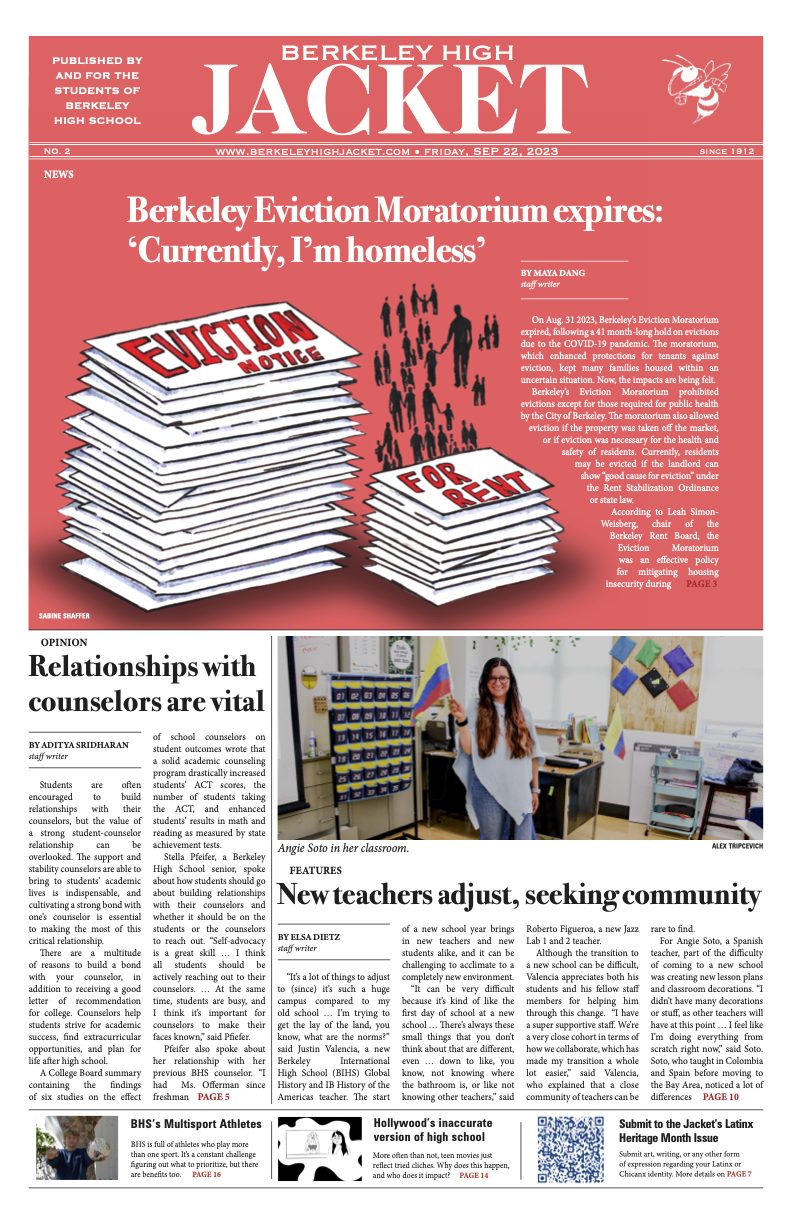
A constant theme in Office Hour is the normalization of gun violence. In another time, Dennis would’ve been just a weird kid. Now, he’s a threat. This is mirrored in the play by the tension and the constant threat of violence faced by Gina due to an omnipresent risk off Dennis pulling the gun out of his backpack and using it. She has to function knowing that she is not safe from Dennis nor from the broader risk of mass shootings.
This threat is sure to be recognizable to BHS students, and to anyone growing up today. The issues explored by this play are extremely relevant, and Office Hour couldn’t have been released at a better time. I highly recommend it to all BHS students.