





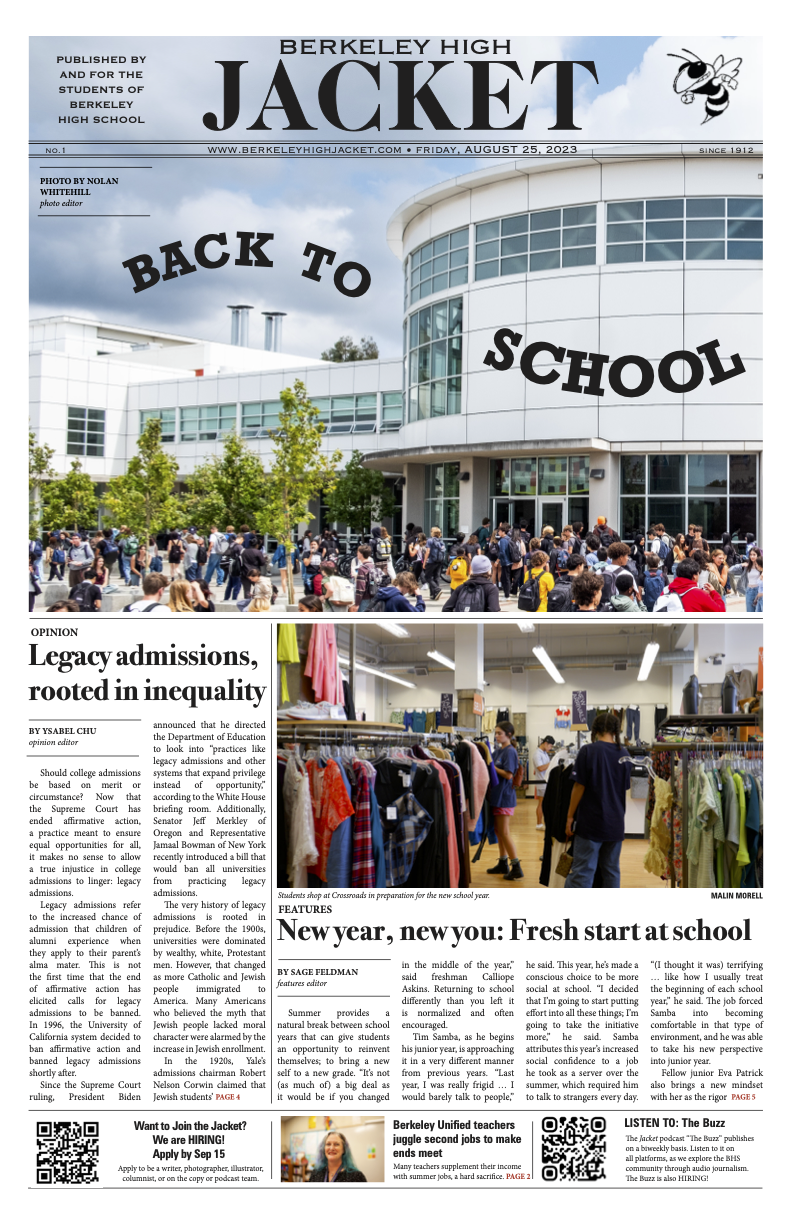

When most people think of factors that go into college admissions, they picture essays, grades, and extracurricular activities. However, there’s another important factor at some schools that has nothing to do with a student’s accomplishments: legacy admissions. Legacy preferences give applicants an advantage at certain colleges if they have a parent or grandparent that attended the same college. While many people describe the legacy admissions process as harmless, in reality it creates an uneven advantage in an already highly competitive process.
One of the biggest problems with legacy admissions is they perpetuate a cycle of inequality and overwhelmingly benefit wealthier and often white students. Historically, elite colleges primarily only admitted wealthy white students while excluding people of color and low-income applicants, creating wide disparities that still exist today. Harvard’s 2021 admissions data shows 19 percent of white students had legacy status versus only 6.1 percent of Black students, revealing how vast disparaties are.
Legacy admissions are deeply tied to weath, granting disproportionate advantages to more affluent students. “I definitely believe it’s unfair,” Berkeley High School junior Lucia Sweet Fuentes said, “People who don’t have that money or that family tree don’t have the same opportunities, which is unfair, because money should have nothing to do with how … deserving you are of attending college.” Families with legacy status are far likelier to be wealthy, and therefore will donate large sums of money to universities. 50 percent of legacy students come from families within the top one percent of income earners, and at Harvard, families with “legacy status” contribute around 12 percent of school revenue.
Legacy admissions completely undermine the idea of meritocracy, the principle by which the admissions process is supposed to make its decisions. Colleges claim admissions processes are based on individual achievement, but legacy status is inherited, not earned. Legacy applicants are admitted five to eight times the normal rate higher at elite colleges, with acceptance rates boosted up to 50 percent for some colleges like Georgetown University, Princeton University, and University of Notre Dame. These statistics reveal that admissions decisions are not being made fairly. Two students with comparable applications can receive completely different outcomes simply because one has a generational connection to the school. “You should have to get into college for how good you are, not other reasons,” BHS junior Leo Till said, “If you don’t have connections, you’re already at a disadvantage … that just feels wrong.” The practice of legacy admissions suggest that who your parents are matters more than what you have accomplished, weakening the integrity of the entire admissions process.
Around 75 percent of Americans say that legacy admissions should be eliminated altogether. Even at Harvard, a school swarming with legacy admission applicants, 60 percent of first year students don’t support the legacy admission program, despite some of them benefiting from the process.
Even though many agree that legacy admissions should be abolished, elite colleges continue to defend them, arguing it can strengthen alumni relationships and increase donations. However, this justification is highly concerning from an ethical standpoint. Admissions decisions should not be treated as fundraising tools, and students that work hard their whole lives deserve to go to good colleges more than students that only get in through family legacy. “College is for everyone, and everyone should be able to go because it determines a lot of your future,” BHS junior Elle Tremblay said, “It’s an important part of life that everyone works really hard for, and deserves, no matter who your parents are, or where you come from.” Students deserve to be evaluated based on their individuality and their achievements, not by their family history or socioeconomic status. If colleges truly believe in equal opportunity, they must stop giving advantages based on legacy status. College acceptances should be a reward of hard work, not an inherited privilege. The first of many steps in leveling the college admissions playing field is eliminating legacy status.