

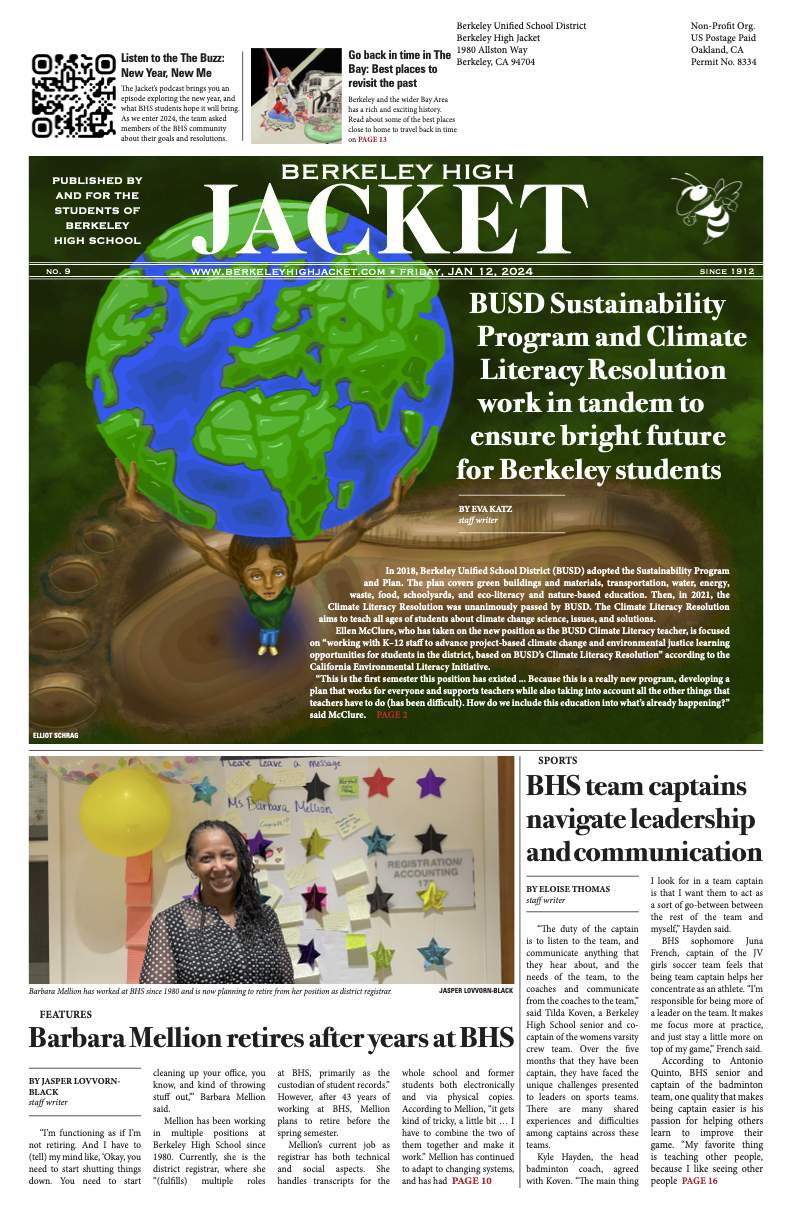




Environmental restoration takes place in many forms. Many times the landscape redesign happens to areas that have virtually no chance at making a “comeback” in restoring their biodiversity. In the status quo, the world is facing a battle against climate change that is rapidly becoming harder. Climate change has become a widespread crisis across the 21st century because of the rise of a new generation with more information regarding the environment. In order for one to fully understand the process of environmental restoration, one must also understand the history and process of global warming.
A common misconception is that climate change is a new discovery, yet the origins of climate change research can be traced back to 1824. In 1824, Joseph Fourier discovered that the Earth is more warm than it should be because of a nuanced reason. He correctly identified the idea that the sun is too distant to be able to maintain the Earth’s temperature as it is, thus he came to the conclusion that greenhouse gases trap heat in the atmosphere. Fourier also hypothesized that the Earth’s atmosphere acts like a glass sphere that is able to trap gasses that are responsible for much of the temperature in our atmosphere. Following the major breakthroughs of Fourier, in 1859 another physicist named John Tyndall contributed to the existing discovery of the greenhouse effect. Tyndall demonstrated that water vapor and carbon dioxide were the absorbers of heat which reside in the atmosphere. With this knowledge he theorized that the presence of water vapor and carbon dioxide in our society would lead to climate change. This finding pinpointed the gases that were consequential, marking a point of significance.
In 1896, a Swedish scientist named Svante Arrhenius determined that the increasing production in carbon dioxide would lead to a major increase in global temperatures. By the mid to late 20th century, the dependence on fossil fuels became undeniably unsustainable. Factories, forms of transport, and power plants released carbon dioxide at alarming rates well beyond what was normal during this era. In 1988, after significantly the warmest year to date, a spike in mainstream awareness occurred. Subsequently, that year, the United Nations established the Intergovernmental Panel on Climate Change (IPCC), an organization to advise governments and assess climate-related evidence. Following this major step forward, in 1992, the United Nations Framework Convention on Climate Change was assembled to create an international treaty for climate action.
As a result of the historical research of our past, environmental restoration has become a necessary response. An abundance of ecosystems which were degraded due to years of pollution, warming, and industrialization are impossible to recover without the use of modern human intervention. Something for a Berkeley High School student to be aware of is the Bay Area. Focus on local projects that aim at preserving biodiversity while simultaneously reducing erosion and rising sea levels. Acknowledge that although climate damage was gradual and dangerous, we must deliberately address this to create a better planet.