
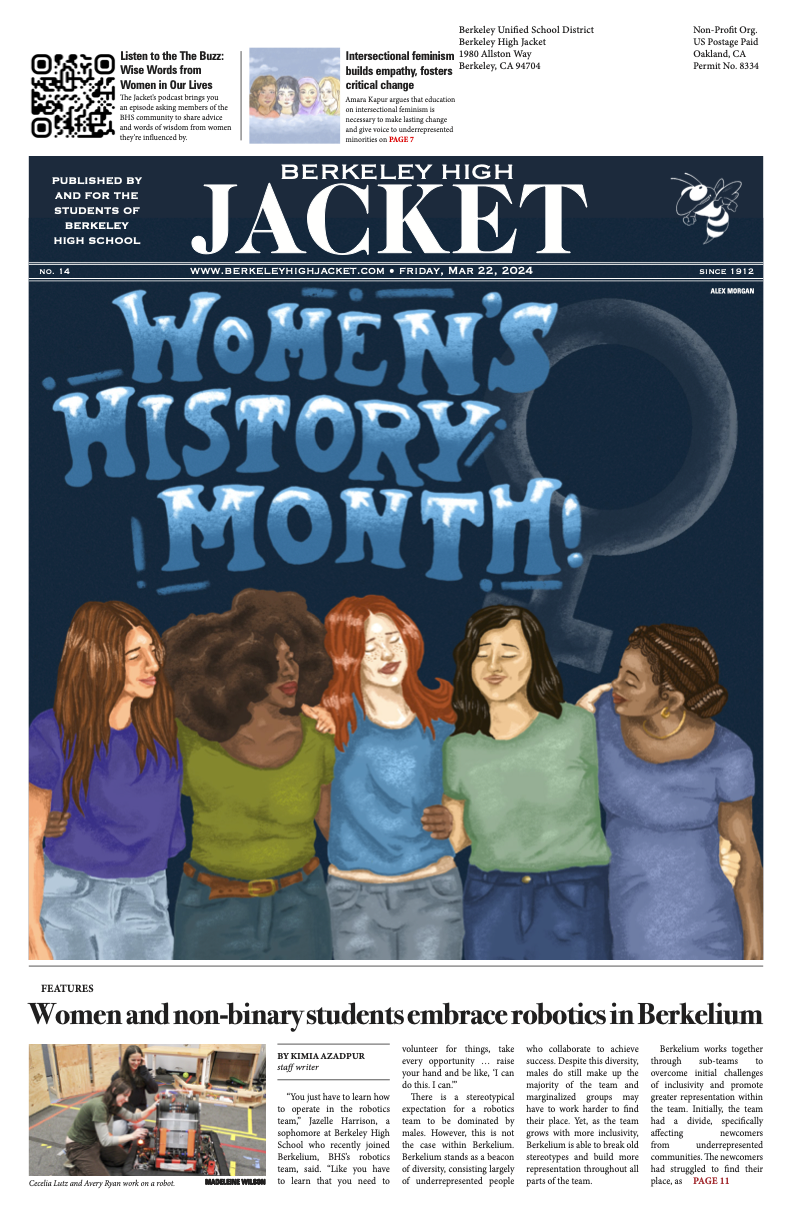


In the 21st century, women in the United States generally have the same rights as men, but it often doesn’t feel that way. Rejection from jobs, financial struggles, and traumatic experiences are notable instances of how women are marginalized by sexism. The record of treating women as far inferior to men spans thousands of years. We often consider how to handle sexism in the future, but not what has led us to the present. How has sexism evolved into what it is today?
Around 12,000 years ago, humans were on the brink of an agricultural revolution. Because males have higher levels of testosterone making them naturally stronger, it made sense for them to handle the farm work. The women were then tasked with childrearing. Men were awarded land ownership because of their work in the fields. They were then set up to benefit in wealth from their properties, and this cycle continued for generations after. As small civilizations developed, important political roles were awarded to men because of their wealth, leading to male dominated societies. Today, men own around 90 percent of agricultural land around the world. Men holding power became a cultural norm that trickled down into most other professional fields.
As society developed and moved on from a focus on agriculture, many old practices were abandoned. Sexism, however, stuck. The renaissance, industrial revolution, and the dot com bubble were time periods that included rapid advancements to infrastructure, the economy, and technology. As these time periods went on, women’s designated responsibility as caretaker and housewife became less and less valuable. The typical role of women as housewives continued from early civilizations until the mid 1900s, when the number of educated females started to rise. By 1970, 50 percent of single women were in the workforce, representing the rapid increase of female professionals during the 20th century. Once they started to make up a significant portion of the workforce, it became clear that although they were putting in the same amount of effort, it wasn’t being valued as much as that of their male counterparts. In 2026, 47 percent of the global workforce is female, and yet they’re only paid 35 percent of global pay.
It’s important to acknowledge that in the 21st century we’ve made big strides to lessen gaps in female representation, pay and leadership. We also need to realize that currently the current presidential administration is pushing us backwards and erasing years of hard fought progress. Roe v. Wade was reversed, Planned Parenthood defunded, and Title IX attenuated. The more we stand up and continue to fight, the better chance we can achieve equality in the future.